


Our easy gluten-free focaccia recipe has a perfect crispy crust & tender, fluffy center. It’s the easiest gluten-free bread around! (Vegan-Friendly!)
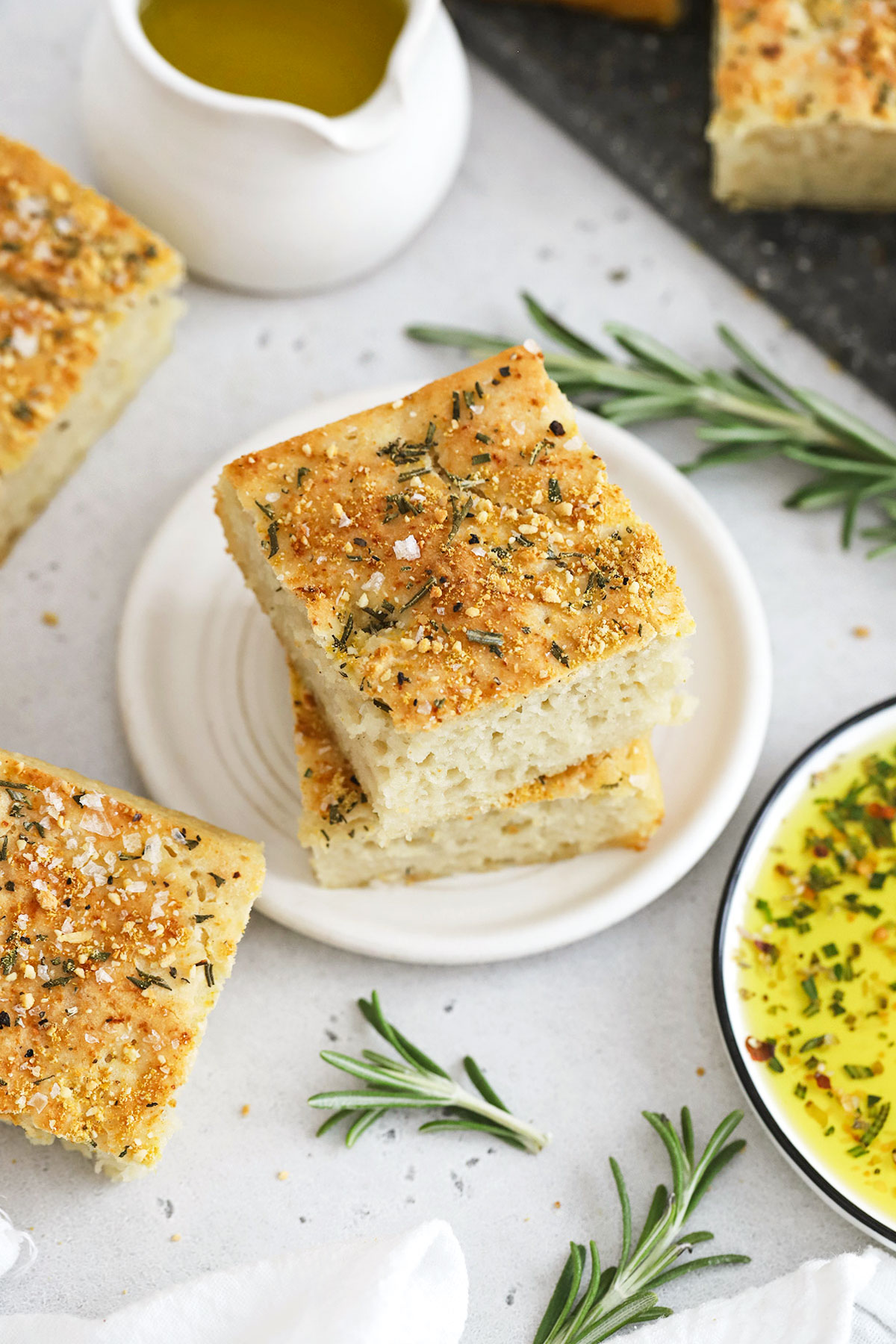
This delicious gluten-free rosemary focaccia has been one of our top posts for the last several years, and it’s better than ever, thanks to updated, more thorough directions & helpful tips!
Before we went gluten-free a decade ago, I used to bake bread all the time. But gluten-free bread is a totally different ballgame! Since there’s no gluten, gluten-free bread dough can be trickier to work with and takes a little extra skill & know-how to get just right.
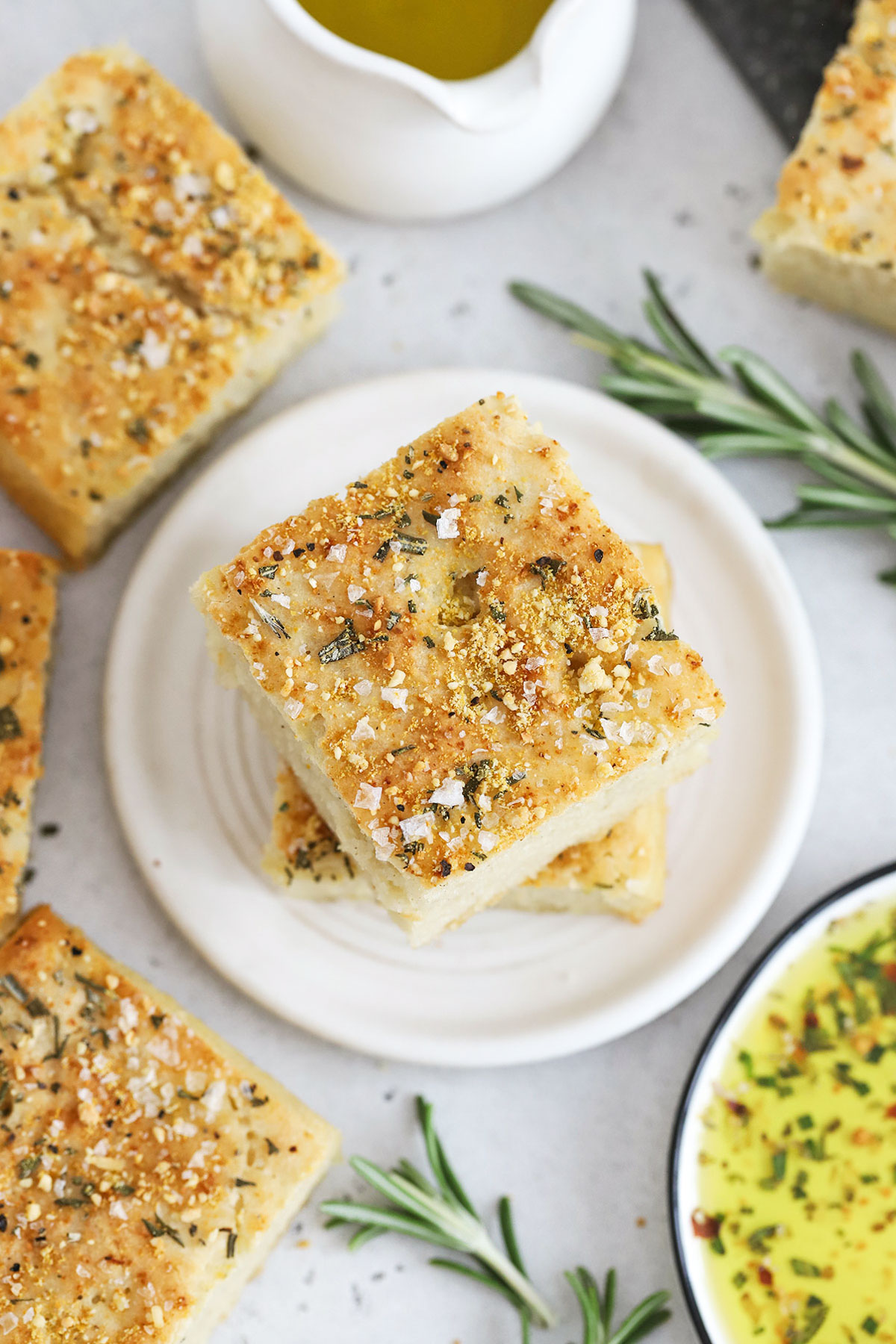
But do you know what’s probably the easiest gluten-free bread recipe around? Focaccia! This gluten-free focaccia bread recipe has a crisp, golden top and bottom, a soft & pillowy center, and just the right seasonings. It’s enough to send me into a swoon!
If you’re new to gluten free baking or haven’t made gluten-free bread recipes before, don’t worry! We’ve got everything you need to be successful. You’ll be baking loaf after loaf of this delicious Italian bread in no-time!
Lets jump in, yes? The carbs are calling!
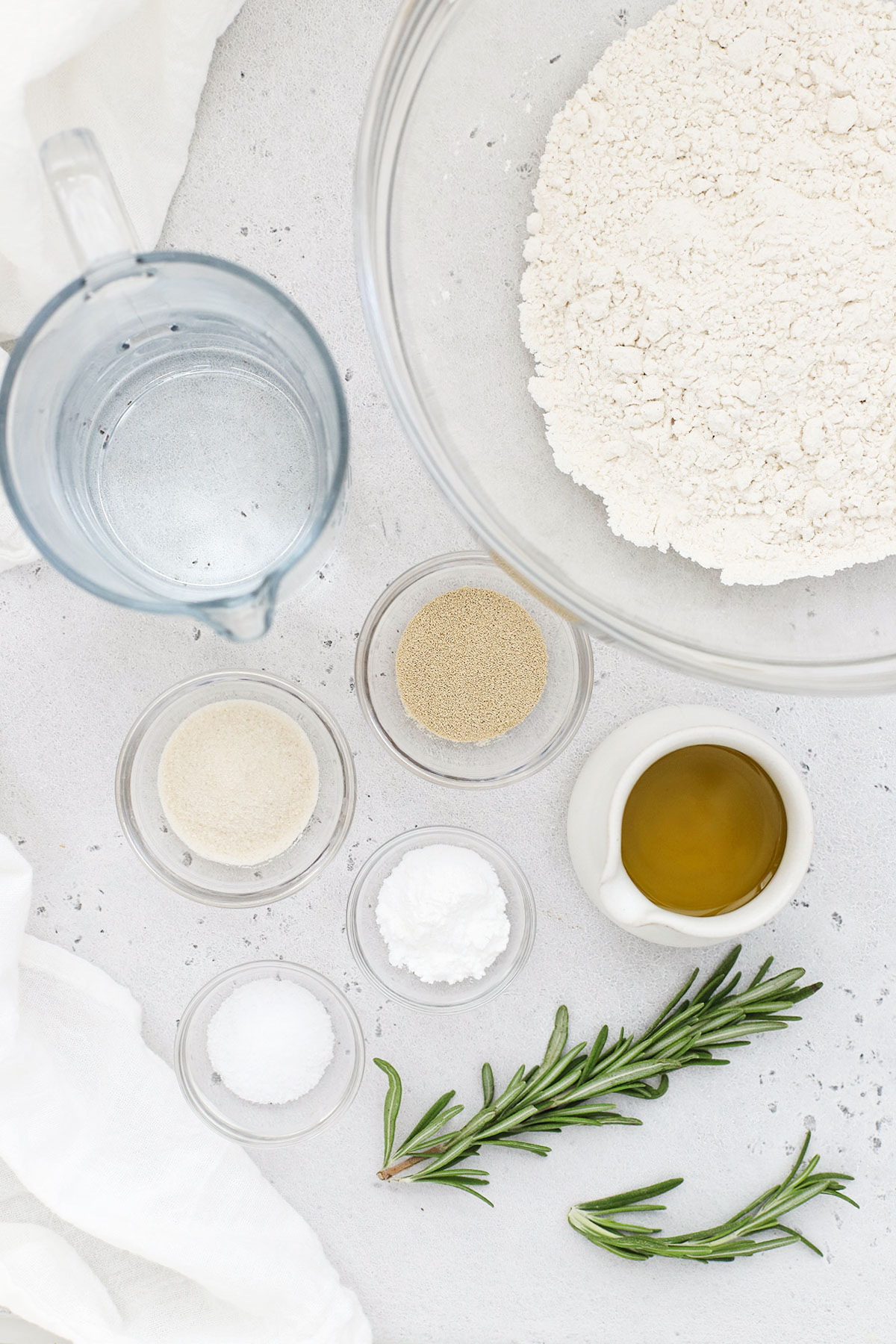
Simple Ingredients For Gluten-Free Focaccia
- Gluten-Free Flour. You’ll keep things simple with a 1:1 gluten-free flour blend. We HIGHLY RECOMMEND King Arthur Measure For Measure Baking Flour with xanthan gum because it gets nice and golden on top and has the best texture inside. I have also tried it with Bob’s Red Mill 1-to-1 gluten free baking flour with decent results, though the Bob’s Red Mill blend usually doesn’t get quite as crisp or “done” as the King Arthur Blend, and some readers report their focaccia stays wet or gummy in the center when they use the Bob’s Red Mill blend.
- Baking Powder & Salt. Using baking powder with the yeast gives this focaccia a little extra lift and really improves the texture. Then, salt comes in to make the flavor amazing!
- Warm Water. Ideally, the water will be between 120-130 degrees to help activate the yeast. I recommend an instant read thermometer for best results, but you can use the touch test, too. If the water is too warm to comfortably keep your finger in it for a few seconds, it’s too hot!
- Honey or Sugar. Adding a little honey or sugar not only helps with the flavor of this bread, but it also helps activate the yeast. Don’t skip it!
- Active Dry Yeast. We’ve made this with instant yeast and regular yeast. Instant yeast will bloom and rise faster (great when you’re short on time!), and regular dry yeast works well, too.
- Olive Oil. You’ll need plenty of extra virgin olive oil for this focaccia recipe! You’ll use some in the dough, some on the pan, some on top, and some to dip!
- A Few Toppings. Then, you’ll top the focaccia with a few little extras before baking. I like a mix of fresh rosemary, parmesan cheese (or vegan parmesan cheese), flaky salt, and black pepper.
How To Make Gluten-Free Focaccia Step By Step
As always, you can find the full recipe, with ingredient amounts, detailed instructions, and tips in the recipe card below!
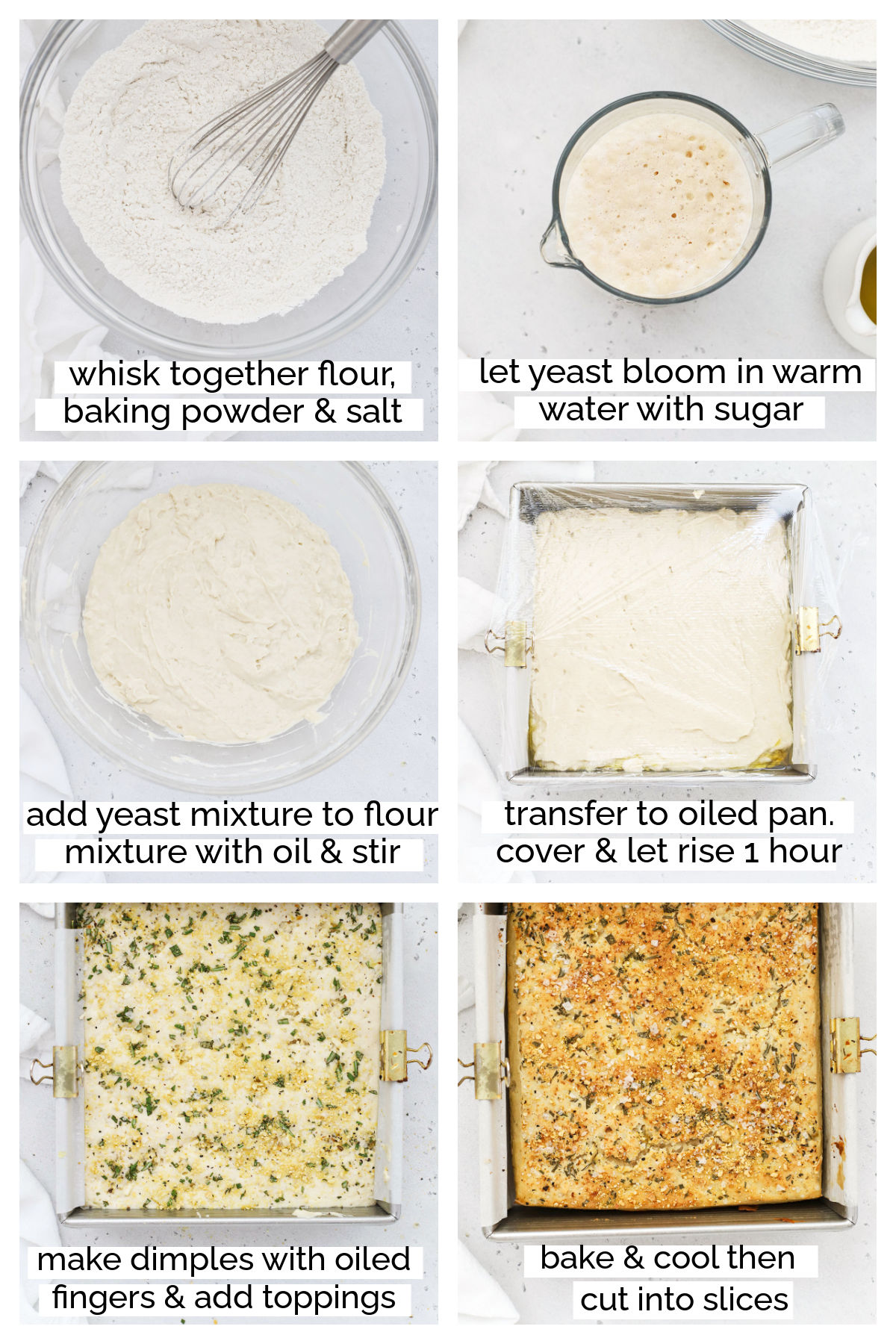
- Combine Dry Ingredients. In a large mixing bowl, whisk together flour, salt, and baking powder. Set aside.
- Warm The Water. Warm your water in the microwave or on the stovetop until it’s warm but not hot. (Ideally, the temperature should be between 120-130 degrees F, but you can use the touch test to tell if it’s ok. If the water is too warm to put your finger in comfortably for several seconds, it’s too hot)
- Bloom The Yeast. Add yeast and honey or sugar to the warm water. Stir to combine, then let it bloom by setting it aside to rest for for 3-5 minutes. (It’ll start to look foamy on top)
- Combine Wet Ingredients & Dry Ingredients. Pour 2 Tablespoons olive oil and the the water/yeast mixture over the flour mixture and stir to combine. Note that the dough will actually be more like batter than dough. You will not knead it.
- Transfer To The Pan. Line an 8×8 or 9×9 metal baking pan with parchment paper. Drizzle 2-3 Tablespoons of olive oil onto the parchment. Gently transfer the focaccia dough to the prepared pan and pat it out or spread it with a spatula. (I usually find it easiest to dip my fingertips into the oil and pat it out by hand). Drizzle the top of the dough with 1 more Tablespoon of olive oil.
- Let The Dough Rise. Cover the pan with plastic wrap or a clean dish towel and set it to rise in a warm place for at least 30 minutes if using rapid rise yeast and about an hour if you use regular yeast. The batter/dough will be roughly double in size.
- Preheat The Oven. During the last 20 minutes of the rise time, preheat the oven to 400 degrees F.
- Dimple The Dough. Coat your fingertips with olive oil and use greased fingers to poke several holes in the dough to form the characteristic “dimples” of focaccia. I find this easiest if I drizzle the surface of the dough with a little olive oil first, then use my fingertips to gently spread the oil before making the dimples. (Try not to smash the dough down)
- Add Toppings. Sprinkle the surface of the dough with fresh rosemary, parmesan or vegan parmesan (if using), coarse sea salt and pepper.
- Bake at 400 degrees 25-30 minutes, or until golden brown. Remove from oven and let cool at least 10-12 minutes before slicing and eating. Store leftover focaccia in an airtight container at room temperature 2-3 days, or store in the freezer and freeze up to 2 months.
ANOTHER OPTION FOR SHAPING: We used to make this rosemary focaccia free-form, by letting the dough rise in a bowl, then pouring it out onto a parchment lined baking sheet on top of 2 Tablespoons of olive oil. I’d shape the dough into roughly an 8×10 shape, then top and bake as directed. This will give you a more organic look, but the focaccia will be much thinner. In the last few years, I’ve exclusively made it in a square pan for a higher rise.
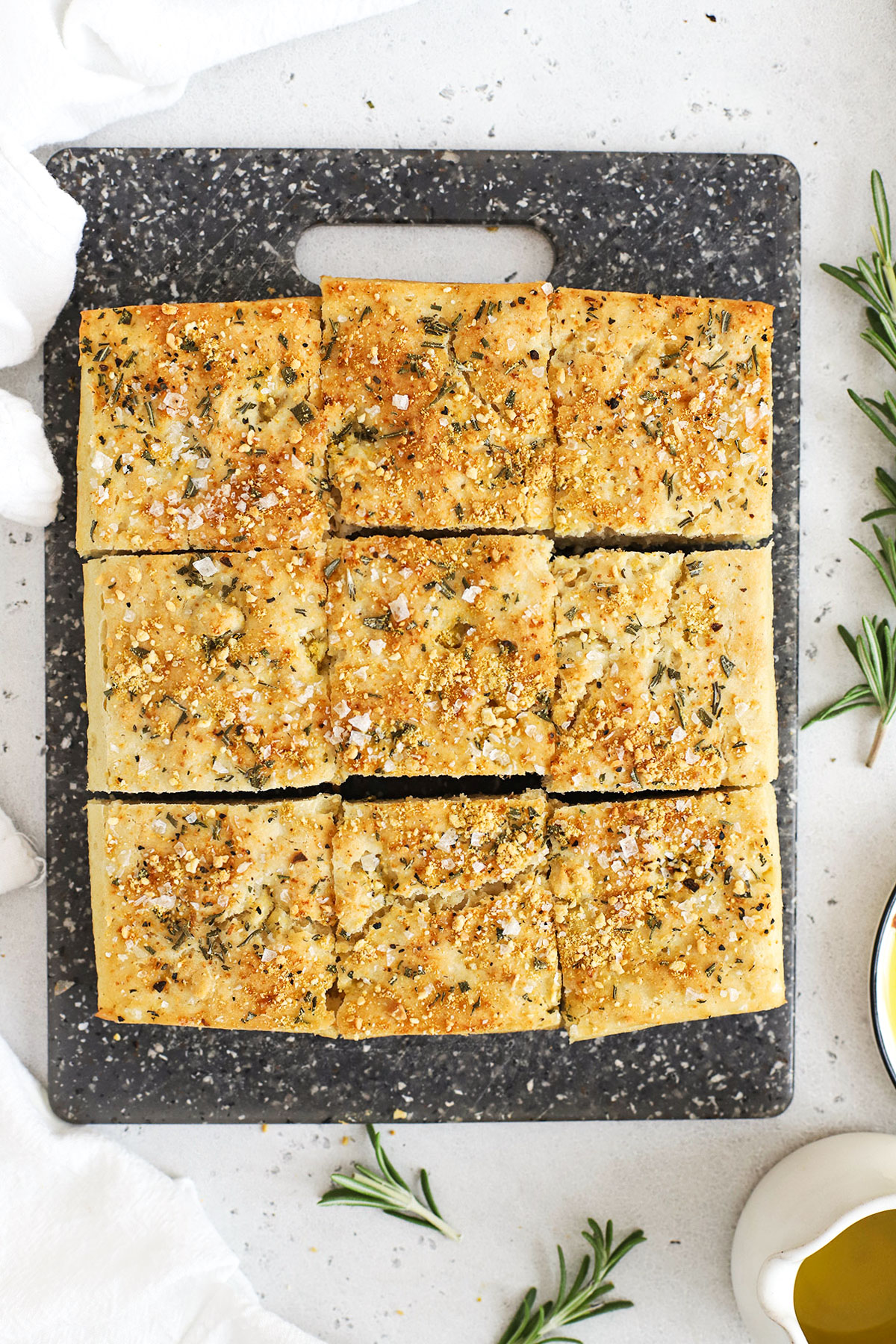
A Few Tips To get This Recipe Just Right
Use Fresh Ingredients
It might seem silly, but it’s important to know you’re using fresh ingredients. If you’re using old baking powder or old yeast, this bread WILL NOT rise no matter what you do. Use this quick test to check your baking powder to see if it’s still active, and watch for the foaming, bubbling reaction in the recipe instructions to make sure your yeast is still active.
Know How To Handle The Dough
If you’ve ever baked with wheat-based flours (white all-purpose, wheat, bread flour, etc.) you’ll be able to tell right away that gluten-free focaccia “dough” is really more like batter. It’s not pliable (there are no gluten or wheat proteins to give it that structure!), and you won’t knead it–you can’t! It’ll be a rather sticky, wet batter instead of a cohesive, stretchy dough. Don’t panic, and DON’T add extra flour!
Use Parchment On Your Pan
Your gluten-free focaccia batter will be sticky, and it can stick to the baking sheet if you don’t prep it. A surefire way to keep your dough from sticking to the pan is to use parchment paper, then drizzle the olive oil on top of it, as directed. I highly recommend you don’t skip the parchment. If you don’t like using parchment paper, at least use a reusable silicone baking mat to help prevent sticking.
Don’t Skimp On Olive Oil. Seriously.
Don’t do it! I know it’ll feel like a lot (especially on the baking pan), but I promise the olive oil is essential for the texture of the interior and exterior of gluten-free focaccia bread. Olive oil helps give that gorgeous crispy crust on the exterior and keeps things light on the interior. I promise your results will not be as good if you try to skimp on the olive oil. It’ll be more dry and spongy. And it won’t get the same gorgeous color. Trust me!
FAQ + More Ideas For This Gluten-Free Focaccia
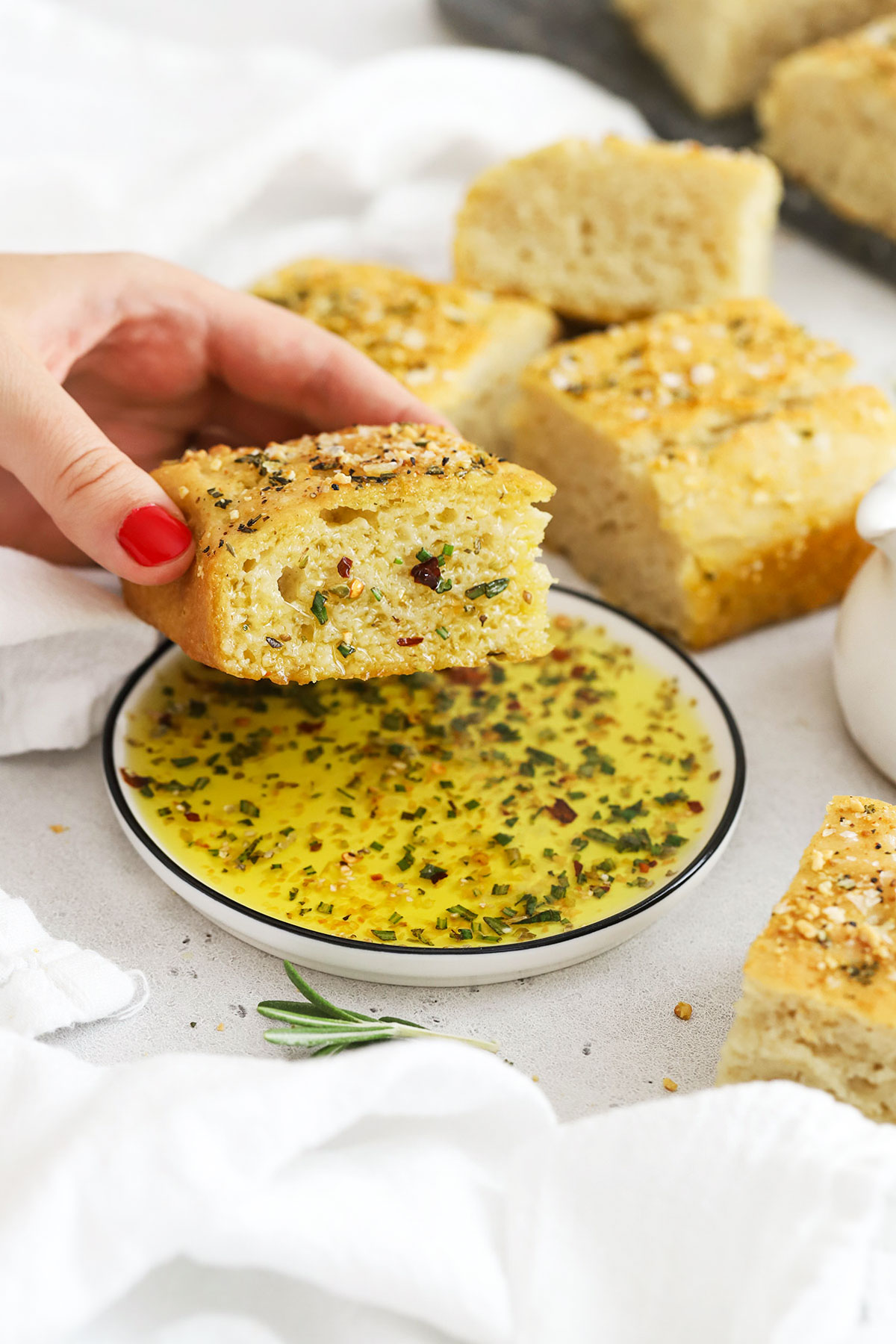
HOW TO SERVE FOCACCIA – I’ve got to say it: my favorite way is when it’s burn-your-mouth hot from the oven. But. After it’s had enough time to actually cool down somewhat, my favorite way to enjoy gluten-free focaccia is dipped in olive oil. We love to make a seasoned dipping oil to serve with it! (It’s also great with marinara sauce!)
HOW TO STORE FOCACCIA – Like most gluten free baked goods, this gluten-free focaccia bread is best enjoyed in 1-2 days. I store mine wrapped tightly or in an airtight bag with extra air pressed out in the refrigerator, then heat it up in the oven (you can use the microwave or a toaster oven) before serving again.
MORE FOCACCIA TOPPINGS TO TRY. Part of what’s so fun about making this focaccia is choosing the toppings! Since this recipe was originally published in 2019, I’ve had dozens and dozens of readers send me their focaccia photos! Play around with the toppings! Readers have tried:
- Sun-Dried Tomatoes
- Caramelized Onions
- Roasted Garlic
- Olives – black, green, Kalamata, Castelvetrano, etc.
- Edible Flowers
- Fresh Herbs – sage, basil, rosemary, dill, parsley, thyme, etc.
- Dried Herbs & Spices – dried oregano, Italian seasoning, dried basil, red pepper flakes, etc.
- Different cheeses – asiago, parmesan, aged white cheddar, and more!


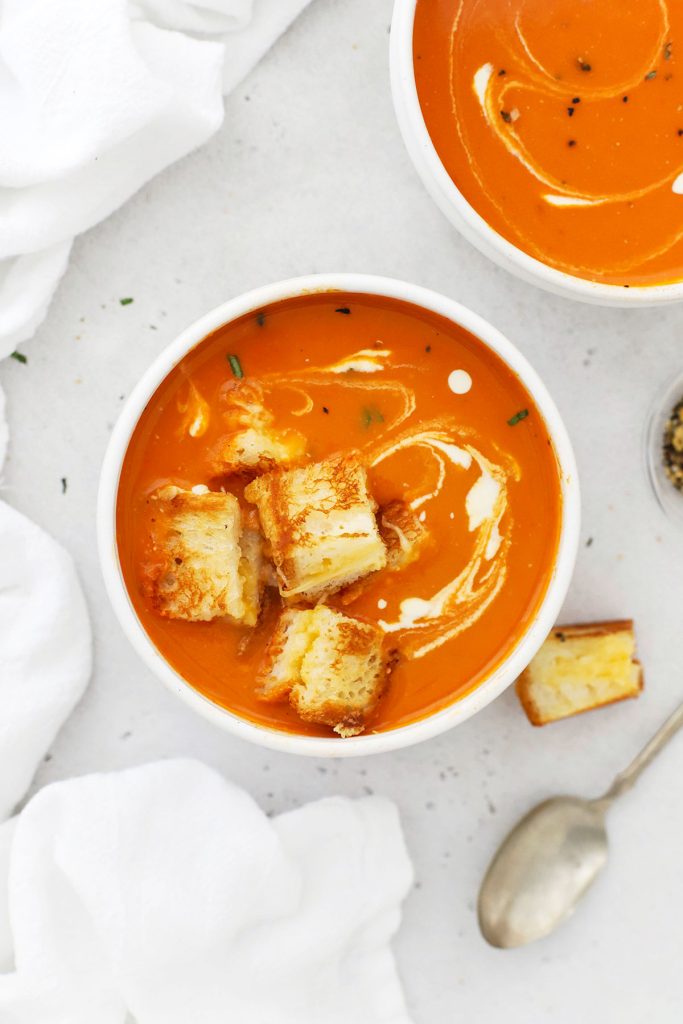

Or, try it with: Autumn Squash Soup, Gluten-Free Caesar Salad, or Italian Chopped Salad!
Did You Make This Recipe?
Tell me all about it! Leave a star rating below when you try our Gluten-Free Focaccia recipe. I can’t wait to hear how it goes!

Gluten-Free Focaccia with Rosemary
Ingredients
For Gluten Free Focaccia:
- 2 1/2 cups 300 grams gluten free 1:1 flour (I highly recommend King Arthur Flour Measure-for Measure flour)*
- 2 teaspoons baking powder
- 1 1/2 cups warm water ideally 120-130 degrees F.
- 1 1/4 oz. package instant or rapid rise yeast (2 1/4 teaspoons)
- 1 Tablespoon sugar honey, or agave
- 1 teaspoon kosher salt
- 4 Tablespoons olive oil divided
For Topping:
- 1 Tablespoon fresh rosemary
- 1-2 Tablespoons vegan parmesan or Parmesan cheese
- 1/2 teaspoon flaky sea salt like Maldon
- 1/4 teaspoon black pepper
Instructions
- Combine Dry Ingredients. In a large mixing bowl, whisk together flour, salt, and baking powder. Set aside.
- Warm The Water. Warm your water in the microwave or on the stovetop until it’s warm but not hot. (Ideally, the temperature should be between 120-130 degrees F, but you can use the touch test to tell if it’s ok. If the water is too warm to put your finger in comfortably for several seconds, it’s too hot)
- Bloom The Yeast. Add yeast and honey or sugar to the warm water. Stir to combine, then let it bloom by setting it aside to rest for for 3-5 minutes. (It’ll start to look foamy on top)
- Combine Wet Ingredients & Dry Ingredients. Pour 2 Tablespoons olive oil and the the water/yeast mixture over the flour mixture and stir to combine. Note that the dough will actually be more like batter than dough. You will not knead it.
- Transfer To The Pan. Line an 8×8 or 9×9 metal baking pan with parchment paper. Drizzle 2-3 Tablespoons of olive oil onto the parchment. Gently transfer the focaccia dough to the pan and pat it out or spread it with a spatula. (I usually find it easiest to dip my fingertips into the oil and pat it out by hand). Drizzle the top of the dough with 1 more Tablespoon of olive oil.
- Let The Dough Rise. Cover the pan with plastic wrap or a clean dish towel and set it to rise in a warm place for at least 30 minutes if using rapid rise yeast and about an hour if you use regular yeast. The batter/dough will be roughly double in size.
- Preheat The Oven. During the last 20 minutes of the rise time, preheat the oven to 400 degrees F.
- Dimple The Dough. Coat your fingertips with olive oil and use greased fingers to poke several holes in the dough to form the characteristic “dimples” of focaccia. I find this easiest if I drizzle the surface of the dough with a little olive oil first, then use my fingertips to gently spread the oil before making the dimples. (Try not to smash the dough down)
- Add Toppings. Sprinkle the surface of the dough with fresh rosemary, parmesan or vegan parmesan (if using), coarse sea salt and pepper.
- Bake at 400 degrees 25-30 minutes, or until golden brown. Remove from oven and let cool at least 10-12 minutes before slicing and eating. Store leftover focaccia in an airtight container at room temperature 2-3 days, or store in the freezer and freeze up to 2 months.
- Our original instructions called for making this focaccia free-form on a baking sheet. This produces a more organic shape, but a thinner dough. If you prefer to follow the old instructions, mix up the dough as directed, but let the dough rise in the mixing bowl covered with plastic wrap. Pour 2 Tablespoons of olive oil on a baking sheet lined with parchment and shape the dough into an 8×10 rectangle. Top & bake the bread as directed.
Notes
- CHOOSE THE RIGHT FLOUR. I *highly* recommend King Arthur Flour Measure-for-Measure flour for this recipe. Bob’s Red Mill 1:1 flour is my other favorite, but will not get as light, as browned, or as “done” in the center as King Arthur Flour. Some readers report their focaccia stays wet or gummy in the center with Bob’s.
- FOR A YUMMY DIPPING SAUCE: Pour 1/3 cup olive oil over granulated garlic, coarse salt, pepper, red pepper flakes, and rosemary, oregano, and/or basil. I usually use 1/4 tsp dried flaked garlic, 1/2 tsp fresh rosemary, 1/4 tsp oregano, 1/4 tsp coarse salt, 1/4 tsp pepper, and 1/4 tsp red pepper flakes
Video
Nutrition
Nutrition facts are an estimate only and will vary based on brands and amounts used.
Originally posted June 2019. Fully updated with video, photos, and updated instructions Aug 2023.
I have made this single batch. I have made it double batch. And I have made it for deep dish pizza crust. I weight my flours (I split the weight of bobs red mill 1-1 and caputo gf) it works every time. Every single time. Thank you! It’s a favorite recipe for my household now.
YUUUUM! I’m so glad it’s such a win for you!
Followed the recipe exactly and it was amazing! My husband is wheat, corn, and sesame allergic and hasn’t had fresh bread in over 6 years. He cried. Thank you!!!!
Sammy, you MADE MY DAY with this review!!! I’m so, so glad your husband loved it. THANK YOU for taking the time to share!
I was skeptical to make this bread. A gluten free bread with high ratings, but no stand mixer required? No psyllium husk or a hundred steps to mimic gluten? Commence the cautious side eye.
It was delicious though. Not as pretty or delicate as a traditional focaccia, but alas is any gluten free alternative ever a perfect replication?
I made it twice actually, because the first time was so good. The second time, I added apple cider vinegar to give it a more open crumb and added a brush of egg wash on top to make it brown a little more near the end.
This is a great recipe that also happens to be easy and straightforward. Thanks for sharing!
Hi! I am planning on making this and was wondering if I could do an overnight rise in the fridge? I am also making focaccia with regular flour and was wondering if I can do them on the same timeline (at least 12 hours rise) or if I ought to just make and bake this the day of?
Thank you!
Alicia
Hi Alicia! Gluten-free bread baking is pretty significantly different than traditional, and it’s pretty different than making traditional focaccia. Unless you are a very experienced gluten-free bread baker, I wouldn’t recommend making any changes to the recipe to avoid disappointing results.
The best and most simple GF focaccia recipe! Tried and true. Thank you! I’ve made it so many times and it keeps getting better! I use Pamela’s all purpose GF flour. Sometimes I look at the crumb and texture and I can’t believe it’s GF and I baked it myself! Been GF for 10+ years.
I’ve made this recipe twice without success but not total failure. The inside texture is not as light as focaccia and the flavor is okay but not delicious. I’ve followed the recipe and ingredient recommendations – the only ingredients I’ve used that weren’t specified are Fleischmann’s Rapid Rise Instant Yeast fast acting and Graza “sizzle” olive oil. Could either of these ingredients be the reason I’m not getting desired outcome??
One thing I noticed during the yeast blooming stage is my water/yeast combo did get foamy but it never looked like the photo. On my second attempt, I even let it bloom for 15 minutes.
Hi Mary! I typically use SAF brand Instant Yeast, so there is a chance that while yours foams, it won’t look precisely like mine. You can double-check your water temperature with a thermometer if you have one to make sure it’s not too warm, which can impact the activity.
I think the olive oil should work just fine, but if you want more flavor, you can absolutely include more herbs, increase the salt, etc. to suit your tastes!
Thank you so much for this recipe!!! It is absolutely fantastic and disappears quickly in my house. We have even used it as pizza crust in a 12” round pan and we won’t be using any other crust from now on. Perfect deep dish style pizza. Delicious!!!
I only have available to me the Active Dry gf Yeast (both Red Star and Bob’s). How much do I use and will it work similarly?
I made a different version using the KA Measure for Measure flour w/o yeast but with baking powder and it came out hard chewy and not browning. I followed their recipe but no good.
I haven’t found a recipe that comes out as shown, and have tried several.
Hi! You can make it with active dry yeast, I just find it can be finicky to work with for some people. Follow the same instructions here, just plan on it taking closer to 1 hour for the dough to fully rise.
This recipe is a winner! super soft and delicious! some ideas….could use this as bread for a sandwich or make it sweet and drizzle chocolate. I used dairy free Cup4Cup and it turned out great. highly recommend!
I really don’t like the thickening agents in this flour, but what’s my choice?
I can’t believe this is gluten free! This really is the closest thing to regular, glutinous bread that I’ve found, and it was so easy! Thanks for my new favorite recipe!
Thank you so much for this kind, thoughtful review! I’m so happy to hear it was a win for you, Elissa!!!